How To Choose Multivitamins With Nutrients GLP-1 Users Often Lack
Share
Starting GLP-1 therapy changes how your body absorbs and uses nutrients. When meals get smaller and digestion slows, even a well-balanced diet can leave a few gaps behind. That’s where choosing the right multivitamin becomes less about marketing claims and more about knowing what your body actually needs.
The good news is that with a little guidance, you can read a multivitamin label like a pro, spot the nutrients GLP-1 users commonly lack, and choose a formula that supports your strength, energy, and long-term wellness — like Replenza.
Consult Your Healthcare Provider First
Before adding any supplement to your routine, start a conversation with your healthcare provider.
Your healthcare provider understands your medical history, lab results, and current prescriptions, which means they can help ensure that any multivitamin you choose truly supports your health rather than overlapping with or interfering with other treatments.
Research shows that patients who meet with a dietitian within the first six months of starting GLP-1 therapy are more likely to have nutritional deficiencies identified early. That early testing and adjustment period can make all the difference, helping you prevent fatigue, muscle weakness, or slower recovery before those gaps start to affect your daily life.
In simple terms, a nutritional deficiency means your body is missing one or more key nutrients it needs to function properly. Left unaddressed, even mild deficiencies can impact your energy, focus, mood, and overall progress on GLP-1 therapy.
Your provider may recommend baseline bloodwork, like checking for vitamin D, B12, iron, or other markers, and then follow up every few months to track how your body is responding. This kind of monitoring helps you personalize your supplement plan, ensuring your multivitamin fills what’s missing and nothing more.
A quick check-in now can save months of guesswork later, giving you confidence that your nutrition plan is safe, tailored, and working as hard as your medication.
Identify Nutrients Commonly Deficient in GLP-1 Users
Even the most balanced diet can fall short when GLP-1 medications enter the mix. These medications slow down digestion and naturally reduce appetite. This is great for weight loss, but that also means you’re eating less and absorbing nutrients more slowly.
Over time, those smaller meals can lead to subtle but important deficiencies if you’re not replenishing intentionally.
Clinical research shows that within six months of starting GLP-1 therapy, about 12.7% of users develop measurable nutritional deficiencies, and that number climbs to 22.4% after one year.
These gaps vary from person to person, but some nutrients are especially at risk. These include:
- Vitamin D
- Vitamin B12
- Iron
- Folate
- Calcium and magnesium
- Zinc
- Vitamins A, E, and K
Even mild vitamin deficiencies can impact your overall well-being, contributing to symptoms such as low energy, dry skin, slower recovery, and more frequent fatigue. Paying attention early helps you correct imbalances before they interrupt your progress.
As your meals shrink, your nutrition shouldn’t. Understanding where gaps commonly occur makes it easier to choose a multivitamin that’s truly built for GLP-1 life, not just general wellness.
Match Multivitamin Ingredients to Key Nutrient Needs
Once you know which nutrients are most at risk, the next step is turning that knowledge into action at the shelf. Reading supplement labels can feel overwhelming, but once you know what to look for, it’s surprisingly straightforward.
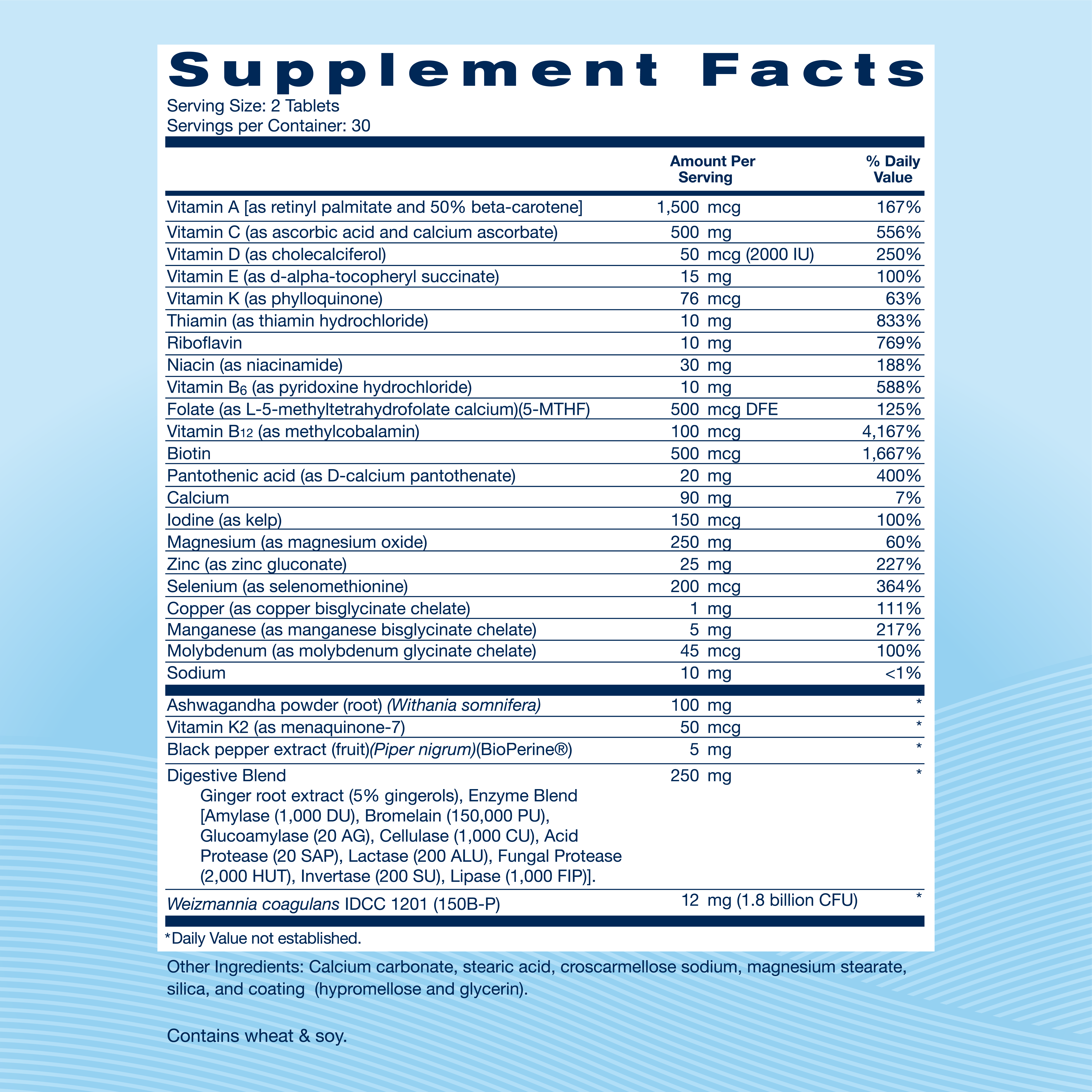
Start by checking that your multivitamin includes the nutrients GLP-1 users most commonly lack: vitamin D, vitamin B12, iron, calcium, magnesium, and the fat-soluble vitamins A, E, and K. These nutrients help fill the gaps created by smaller meals and slower digestion.
When comparing supplement facts panels, look for doses that are meaningful but stay within the Recommended Dietary Allowance (RDA) or Adequate Intake (AI) levels. A good multivitamin complements your diet, but it shouldn’t replace food entirely or overload your system.
If the label looks like a wall of percentages, focus on these essentials first. A thoughtfully formulated multivitamin should cover what GLP-1 therapy tends to deplete, while staying balanced and safe for daily use.
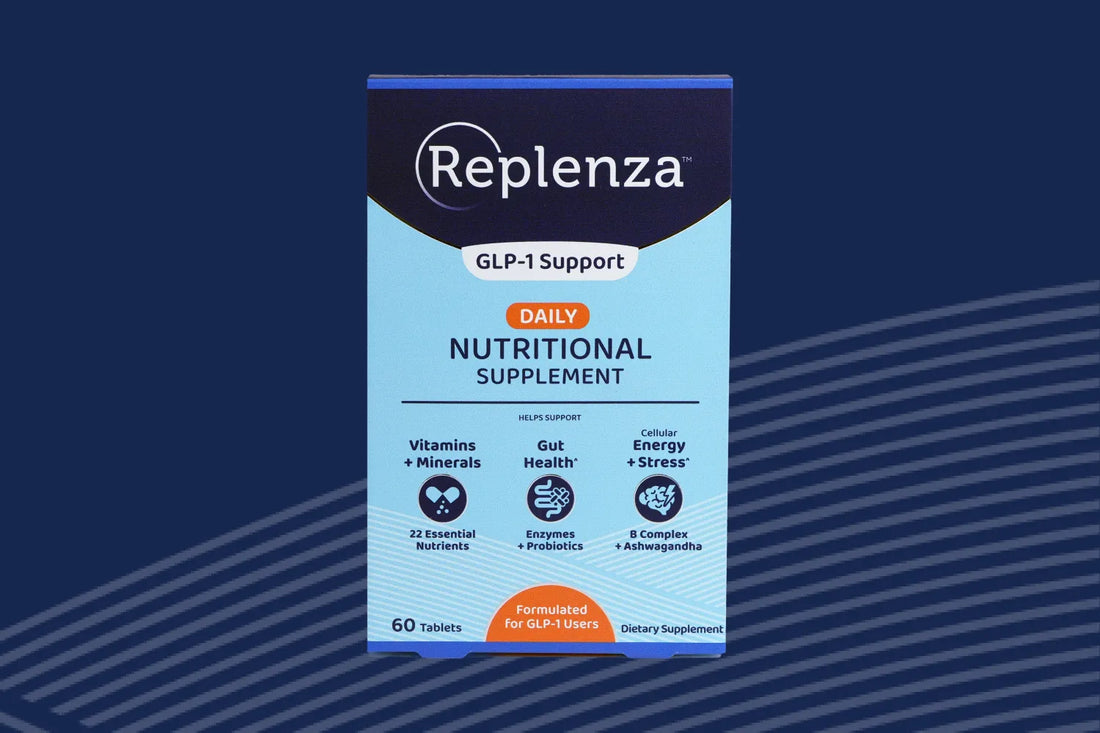
For extra reassurance, Replenza’s Daily Nutritional Supplement is physician-formulated and NSF-certified, designed specifically with GLP-1 users’ nutritional patterns in mind.
Choose Age- and Gender-Appropriate Formulas
There’s no true one-size-fits-all when it comes to supplements. The right multivitamin should fit your body as precisely as your GLP-1 plan, taking age, gender, and lifestyle into account. That’s what makes age- and gender-specific formulas so helpful.
They’re designed to deliver nutrients in amounts that match your body’s unique needs, a concept known as an age-appropriate formula: a multivitamin adjusted for life stage, sex, and (in women) pregnancy status.
Women, for example, may need higher levels of iron and folate, since both nutrients support red blood cell production and reproductive health. Men’s multivitamins, on the other hand, often include less iron but may emphasize heart and prostate support.
For older adults, extra vitamin D and calcium become key to maintaining bone density and muscle strength as natural absorption rates decline.
Here’s how it often breaks down:
-
Premenopausal women: Higher iron and folate to offset menstrual losses and support overall vitality.
-
Men aged 30-60: Moderate iron, plus nutrients that promote energy metabolism and cardiovascular health.
-
Adults over 50: Increased calcium, vitamin D, and B12 for bone, nerve, and metabolic support.
- Women of childbearing age: Added folate to support reproductive health and reduce deficiency risks.
Before committing to a formula, take a minute to double-check the label against your actual needs. If a multivitamin’s claims sound generic or don’t match your life stage, it might not be giving your body what it truly requires.
Prioritize Quality Certifications and Reliable Dosing
When it comes to supplements, quality matters just as much as ingredients. Not all multivitamins are created equal, and the best way to know what you’re actually getting is to look for third-party certifications.
These independent seals (like NSF, USP, or Informed Choice) confirm that a product has been tested for purity, potency, and ingredient accuracy.
Third-party certification means that an outside organization has verified that the supplement contains what it claims, in the correct amounts, and is free from harmful contaminants or fillers. It’s an easy way to separate the trustworthy from the too-good-to-be-true.
You’ll also want to consider form and dosing. Capsules and powders tend to hold up better than gummies, which can lose nutrient potency over time and make dosing less consistent. Additionally, gummies often contain added sugars or flavoring agents that provide no real benefit.
Finally, more isn’t always better. Taking too many supplements or too much of one vitamin can lead to imbalances or even toxicity. Stick to the recommended dosages and use your multivitamin as a daily safety net, not a replacement for a balanced diet.
Evaluate Your Current Diet and Lifestyle
Before reaching for a new multivitamin, take a closer look at what’s already on your plate (literally). Supplements work best when they fill true nutritional gaps, not when they duplicate what you’re already getting.
GLP-1 users often shift from three meals plus snacks to fewer, smaller meals, which naturally cuts down on calories and nutrients. That’s why it helps to track what you eat for a week or two using a simple food log or digital nutrition tracker.
You’ll start to notice patterns — maybe you’re low on dairy, skipping greens, or relying on quick protein snacks. Those insights are gold for identifying where support is needed.
Here’s a simple way to think about it:
- If you eat little or no dairy, prioritize calcium and vitamin D.
- If you’ve cut back on red meat, look for iron and B12.
- If veggies are hit or miss for you, make sure your multivitamin includes folate, magnesium, and zinc.
Try to build your meals around nutrient-dense foods (lean proteins, fruits, veggies, whole grains, and healthy fats) even if they’re smaller in size. When possible, aim for smaller, more frequent meals to keep energy steady and avoid nutrient dips throughout the day.
A well-chosen multivitamin should fit into that picture as a complement, not a crutch, filling the real gaps your daily diet leaves behind.
Monitor Your Health and Adjust Supplementation as Needed
Your supplement plan should evolve as you do. Treat it like a feedback loop: notice changes, check the data, and fine-tune with your care team.
Start by tracking how you feel and perform. Keep quick notes on energy, mood, sleep, workouts, and any new symptoms. If something shifts, bring it to your provider so you can adjust dosage, form, or timing as needed.
In practice, this looks like:
-
Monthly check-ins: Review your multivitamin, protein intake, and any side effects with a simple notes app.
-
Routine labs: Consider periodic micronutrient testing for vitamin D, B12, iron, and other essential nutrients. Routine micronutrient monitoring is recommended for patients on chronic GLP-1 therapy.
- Red flags to revisit: Persistent fatigue, frequent illness, changes in hair or skin, dizziness, or ongoing digestive issues may signal a mismatch between your intake and your needs.
Keep quality front and center. Verify that your multivitamin carries a third-party certification, confirms exact dosing, and lists forms you tolerate well. If questions arise, pause and consult your healthcare provider before adding or stacking new products.
The goal is simple. Use your real-world feedback and lab results to keep your plan targeted, safe, and effective so your multivitamin closes true gaps while your GLP-1 does its work.
Building Better Nutrition Starts Here
At Replenza, we believe choosing the right multivitamin shouldn’t feel like guesswork. For anyone on a GLP-1 journey, nutrition is about more than calorie counts. It’s about giving your body the nutrients it needs to stay strong, balanced, and energized while the medication does its job.
That’s why we created Replenza: a physician-formulated, NSF-certified nutritional supplement made specifically for GLP-1 users. Each blend is crafted to replenish the vitamins and minerals most commonly depleted during therapy, so you can focus on feeling good.
When you nourish smarter, everything else follows: steadier energy, stronger recovery, healthier skin, and better long-term results. Because your GLP-1 plan shouldn’t leave you running on empty.
Stay balanced, stay supported, and stay replenished with Replenza’s GLP-1 Nutritional Supplement.
FAQs
What nutrients do GLP-1 users often lack?
GLP-1 users most often lack vitamin D, iron, vitamin B12, calcium, magnesium, and fat-soluble vitamins A, E, and K due to reduced food intake and changes in digestion.
How do I select a multivitamin that fits GLP-1 therapy needs?
Select a multivitamin that specifically addresses common GLP-1 deficiencies, includes essential vitamins and minerals, and bears a third-party testing seal for quality and accuracy.
Should GLP-1 users take supplements beyond a multivitamin?
Some people benefit from adding collagen, omega-3 fatty acids, or protein to support muscle recovery, skin health, and overall nutrition, especially during active weight loss phases.
What form of multivitamin is best for nutrient absorption?
Capsules or powders are typically preferred because they maintain nutrient stability and deliver consistent dosing compared to gummies.
How often should GLP-1 users take multivitamins?
Most multivitamins are designed for daily use, but your healthcare provider can help you determine the optimal timing and dose based on your individual needs and lab results.
Sources:
GLP-1 Agonists Linked To Increased Nutritional Deficiencies, Reveals Research | Medicaldialogues.in
Work with a Registered Dietitian to Maximize Your GLP-1 Results | Beyond Type 1
Addressing nutritional gaps with multivitamin and mineral supplements | PMC
Grüns Review by a Dietitian: Are Gummies Really Better? | Lets Live it Up
Vitamin Deficiency Types, Symptoms, Diagnosis | Cleveland Clinic